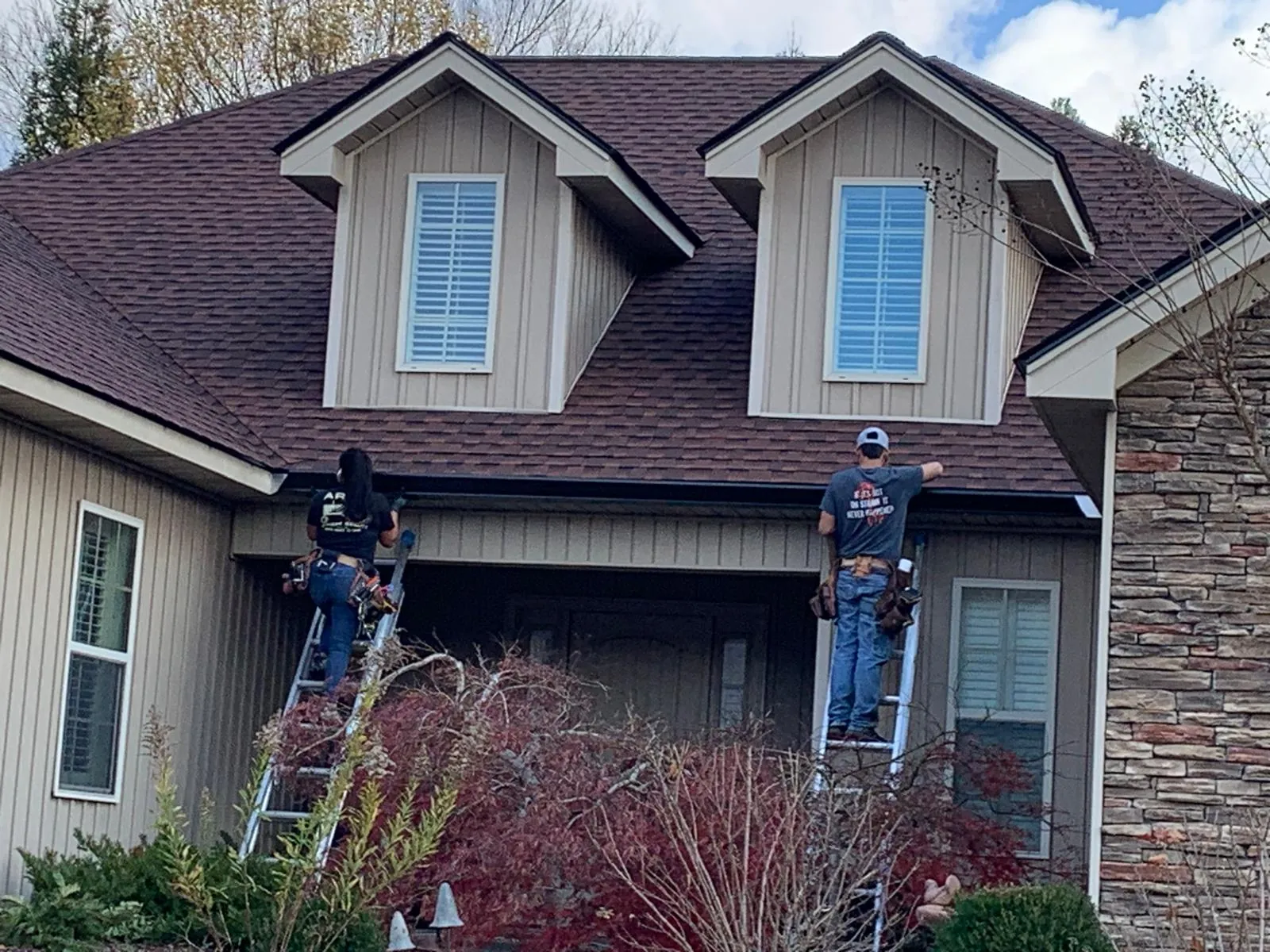
Roof tear-off can reveal areas of the roof that were hidden beneath older roofing materials. An exposed opening or damaged section in the roof deck deserves careful attention because the final roof covering should not be installed until the underlying area is properly evaluated. Roof deck openings during tear-off can involve damaged sheathing, framing concerns, previous repairs, or areas that require replacement before the new roofing system is completed.
Old shingles can conceal deterioration for years. Once the roof covering is removed, contractors can see the actual condition of the sheathing and the components beneath it. This creates an opportunity to address problems before they become part of the new roof installation.
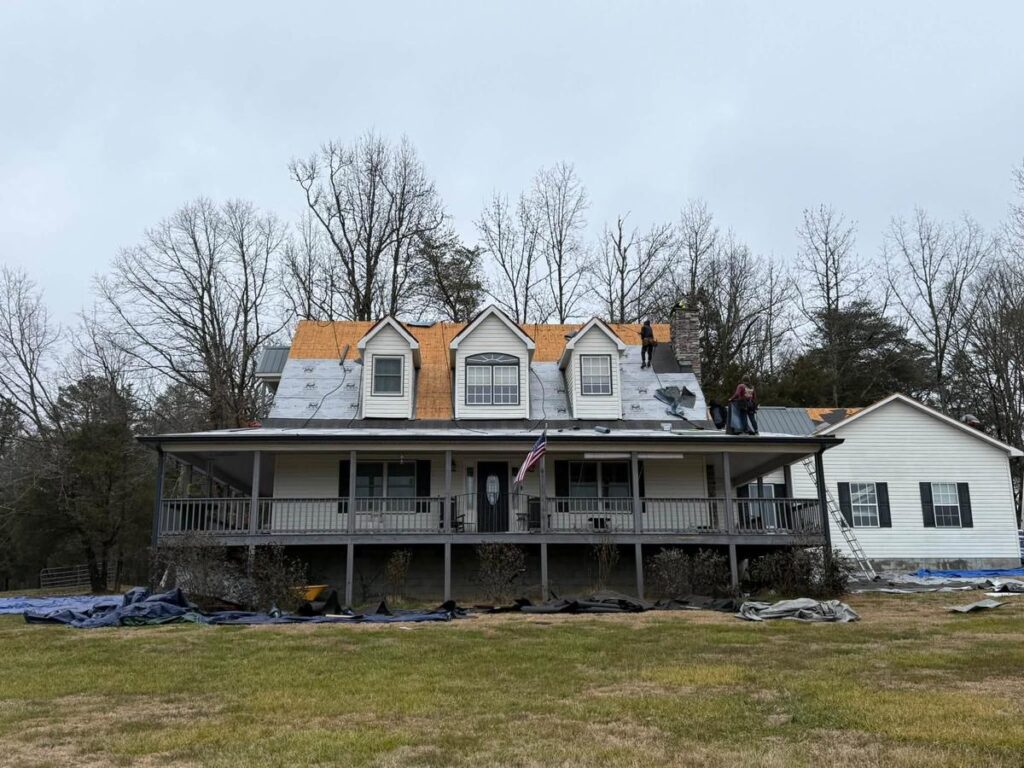
The appropriate repair depends on what the contractor finds. Some areas may remain sound, while others may require removal of damaged material and installation of suitable replacement sheathing.
An open section of roof deck may be part of active replacement work rather than evidence of a larger structural problem. During a tear-off, selected panels can be removed so the crew can inspect the framing, replace deteriorated material, or prepare a specific area for new sheathing.
What matters is whether the remaining structure and surrounding materials are suitable for the next stage of the roofing project.
Damage is not always limited to the exact area that has been opened. Moisture exposure, delamination, swelling, soft wood, or deterioration can extend into nearby sections. Contractors need to evaluate the surrounding material rather than treating the visible opening as an isolated point without inspection.
Homeowners can review JDB Construction & Roofing’s roof deck preparation guidance for a better understanding of what preparation can involve before new shingles are installed.
When sheathing is removed, the roof framing becomes more accessible for inspection. The framing supports the deck, so contractors may check for visible damage, unusual movement, or other conditions that could affect the repair.
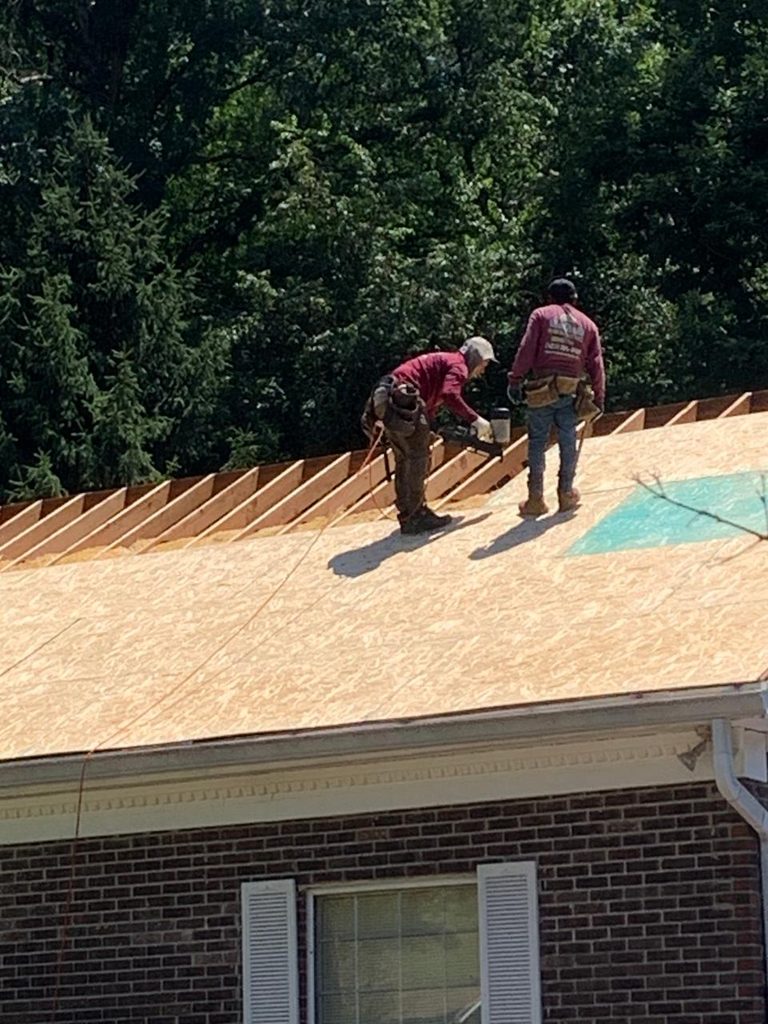
Any structural concern that extends beyond the roof sheathing may require a more specific repair approach before the area is closed and the roofing layers are restored.
Roof deck problems are often connected to moisture. Previous leaks, failed flashing, damaged roof coverings, or other pathways can allow water to affect wood over time. Even after the visible source has been addressed, the deck should be checked for resulting damage.
Identifying why an area became damaged can help reduce the risk of repeating the same problem after the new roof is installed.
When a deck section requires replacement, the new panel should be appropriate for the roof assembly and installed with suitable support and fastening. The repair should leave a stable surface that can receive the subsequent roofing layers.
Replacing only what is necessary can make sense when the surrounding deck remains sound, while broader deterioration may require a larger scope of replacement.
Once damaged or unsuitable areas are addressed, the roof can continue through the planned installation sequence. Depending on the project, this may include underlayment, flashing, ventilation components, and the selected roof covering.
Homeowners planning a complete project can review the roof tear-off process to understand why removal and inspection are important parts of roof replacement.
Professional evaluation is valuable whenever tear-off exposes widespread deterioration, unusual openings, repeated moisture damage, or conditions that are difficult to judge from the ground. A roofing crew can determine whether the issue is localized or part of a larger roofing-system problem.
For complete roofing planning, JDB Construction & Roofing can assess the roof and explain the preparation needed before re-roofing.
A section may be opened to remove damaged sheathing, inspect framing, address a repair, or prepare the surface for replacement materials.
No. A localized opening can be part of targeted repair work. The condition of the surrounding roof deck determines whether additional replacement is needed.
Possible signs include soft wood, swelling, delamination, moisture staining, deterioration, or other material changes. A contractor should evaluate the actual condition on site.
It can be appropriate to inspect exposed framing because the framing supports the roof deck. Any concern found there may require attention before the area is closed.
Free inspections, honest estimates, photo-documented insurance claim help, and 24/7 storm response across the Tennessee Valley and Middle Tennessee.
Request Free Inspection Call (423) 558-2016