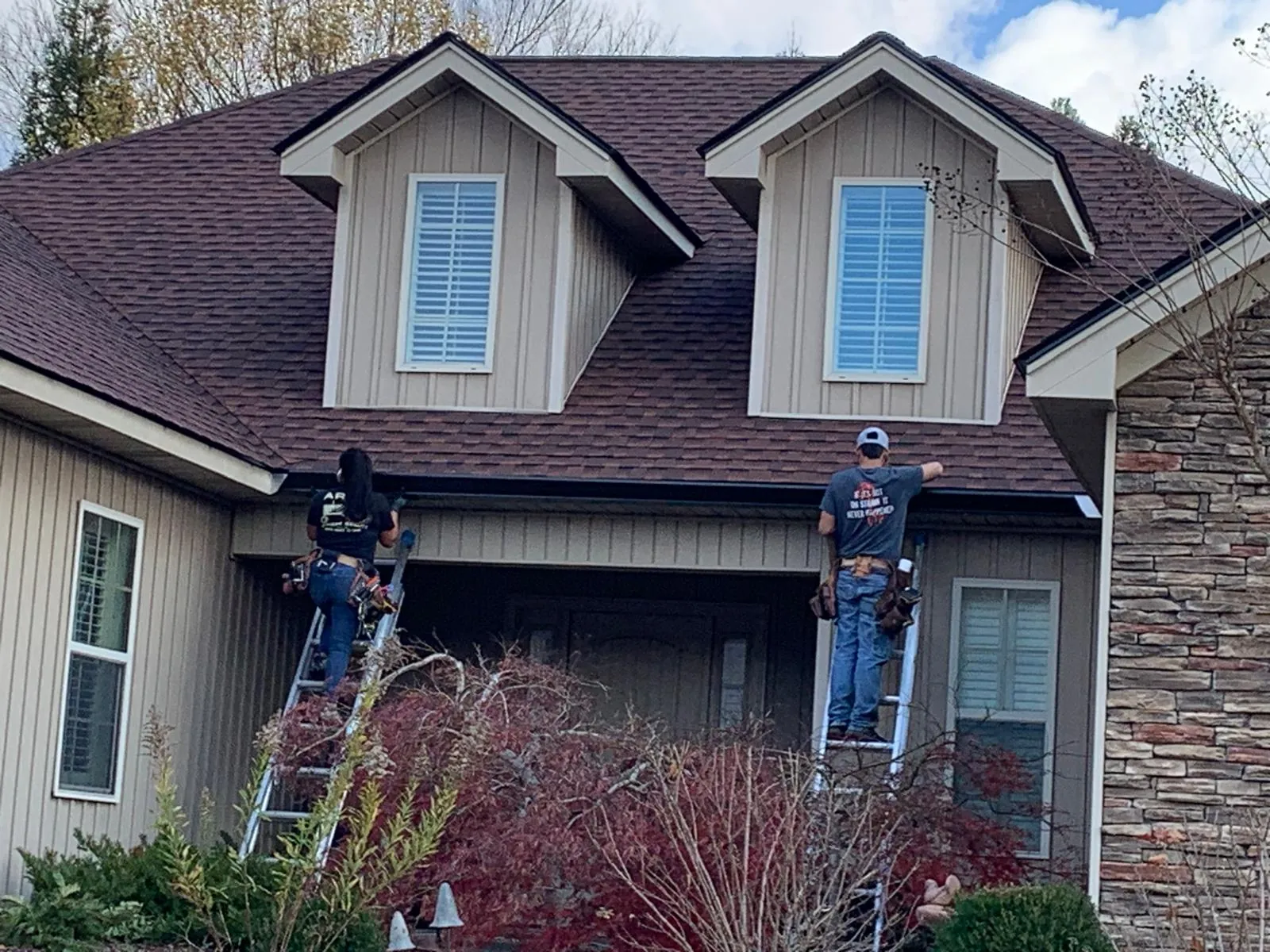
During a roof replacement, there is a stage between exposing the roof deck and installing the final shingles. This stage is often described as the roof dry-in stage. It focuses on getting the roof assembly prepared and protected before the primary roof covering is installed. Understanding the roof dry-in stage before shingles can help homeowners know what is happening during a reroofing project.
Roof dry-in generally refers to the process of installing the roofing layers that provide temporary or secondary weather protection before the final roof covering is completed. The exact materials and procedures vary by roof system and product requirements.
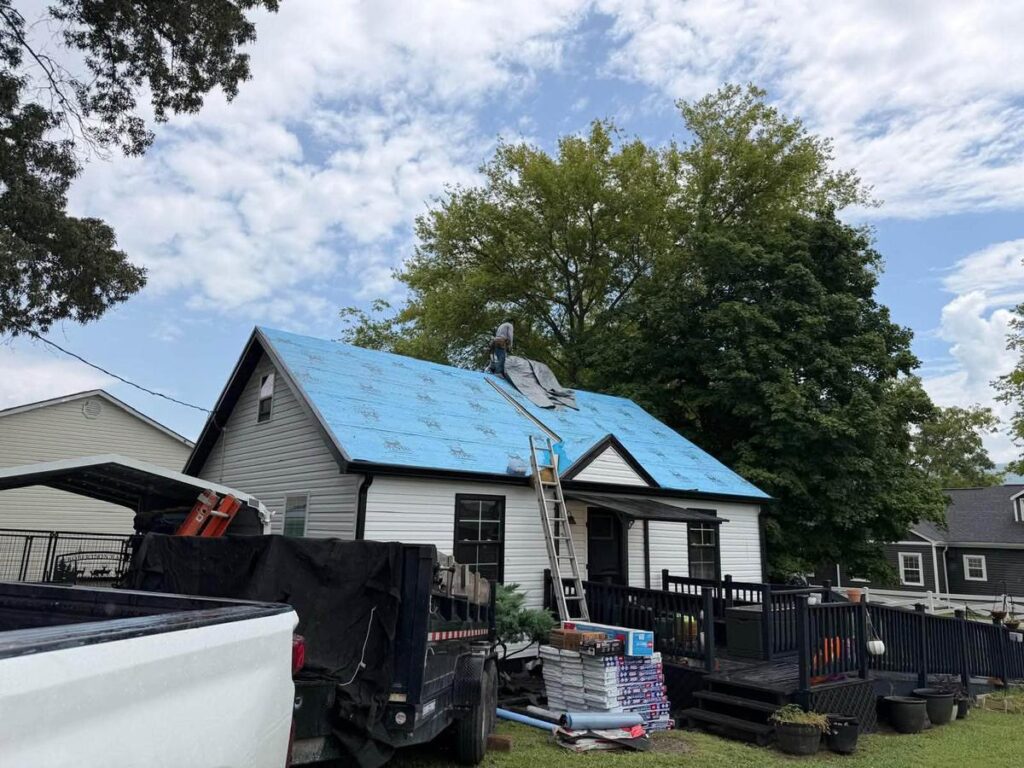
For many asphalt shingle projects, this stage can involve underlayment, flashing-related preparation, and attention to roof edges and penetrations.
Underlayment is installed over the prepared roof deck beneath the primary roof covering. It can provide an additional layer of protection against weather exposure while also serving as part of the complete roofing assembly.
The selected underlayment and installation method should follow the product requirements and the design of the roof. JDB Construction & Roofing also provides information on synthetic roof underlayment and its role in new roof installation.
A dry-in layer should not be used to hide a damaged roof deck. Before the underlayment is installed, the roof surface needs to be evaluated and any unsuitable areas should be addressed. This helps the later roofing layers start from a stable base.
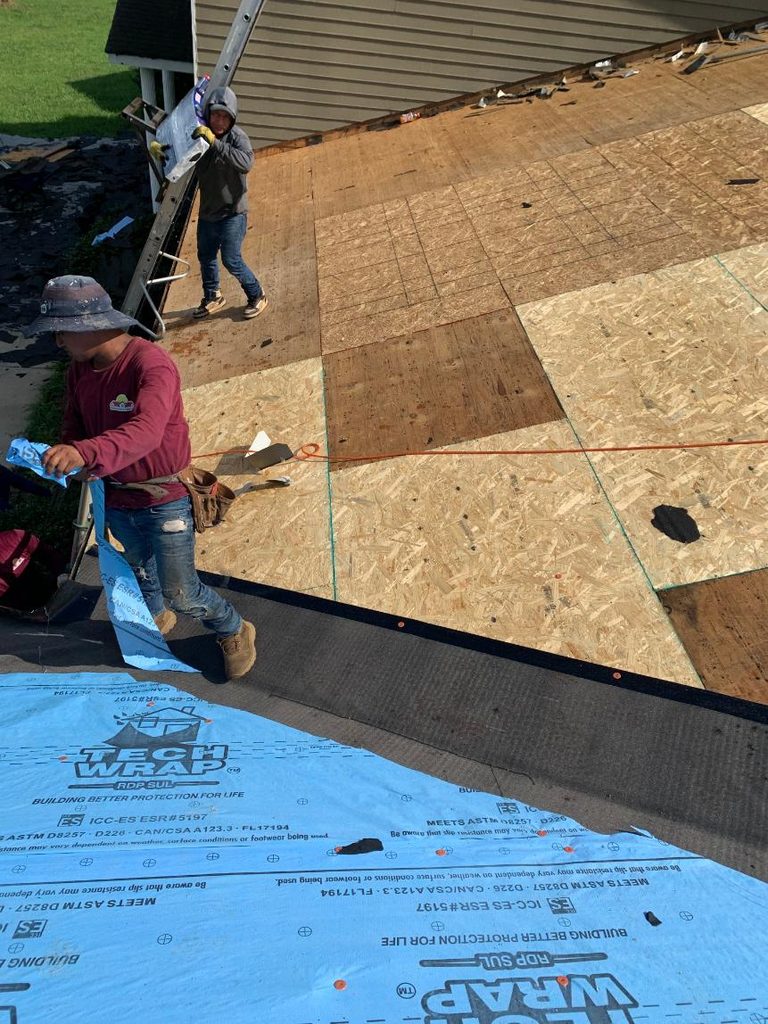
Roof deck preparation is therefore closely connected to the dry-in stage, even though the two are separate steps in the overall installation process.
Roof edges, valleys, wall intersections, vents, chimneys, and other transitions are areas where several roofing components come together. Dry-in work needs to be coordinated with those locations so the system remains continuous and the next installation stage can proceed correctly.
Details vary by roof design and materials, so homeowners should expect contractors to follow the requirements of the selected roofing assembly rather than use one identical method on every home.
Once the roof is appropriately prepared and the required protective layers are in place, the project can move toward shingle installation. A controlled dry-in stage gives the roofing crew a prepared surface and helps organize the sequence of the remaining work.
The final shingles still need to be installed according to the product requirements, roof design, and appropriate fastening and layout practices.
Roofing work takes place outdoors, so weather can influence scheduling and installation. Contractors may need to protect exposed areas, secure materials, and adjust the work sequence when conditions change.
A homeowner should discuss the planned installation sequence with the roofing contractor, particularly when the roof is open and the weather forecast is uncertain.
Useful questions include which underlayment product is being installed, whether the roof deck required repairs, how penetrations and transitions are being handled, and what remains before the shingles are installed. These questions can help homeowners understand the work taking place beneath the final roof covering.
For broader roof planning, roof inspections can help identify conditions that should be addressed before a replacement project begins.
Dry-in is an important stage, but it is not the finished roof. The project still needs the primary roof covering, edge details, flashing, ventilation components, and other required elements to complete the roofing assembly.
When homeowners are ready to discuss the complete project, JDB Construction & Roofing can help explain the sequence from roof preparation through final installation.
The roof dry-in stage is the part of a roofing project when the roof is prepared and protective layers such as underlayment are installed before the final roof covering is completed.
No. Dry-in is a preparation and protective stage. Asphalt shingles or another primary roof covering are installed afterward as part of the completed roof system.
Unsuitable roof decking should generally be addressed before later roofing layers are installed. Covering damaged material does not resolve the underlying deck problem.
The project can move toward installation of the primary roof covering and completion of flashing, ventilation, edges, and other components required by the roofing system.
Yes. Outdoor roofing work is affected by weather conditions, and contractors may need to protect exposed areas or adjust the installation sequence when conditions are not suitable.
Free inspections, honest estimates, photo-documented insurance claim help, and 24/7 storm response across the Tennessee Valley and Middle Tennessee.
Request Free Inspection Call (423) 558-2016